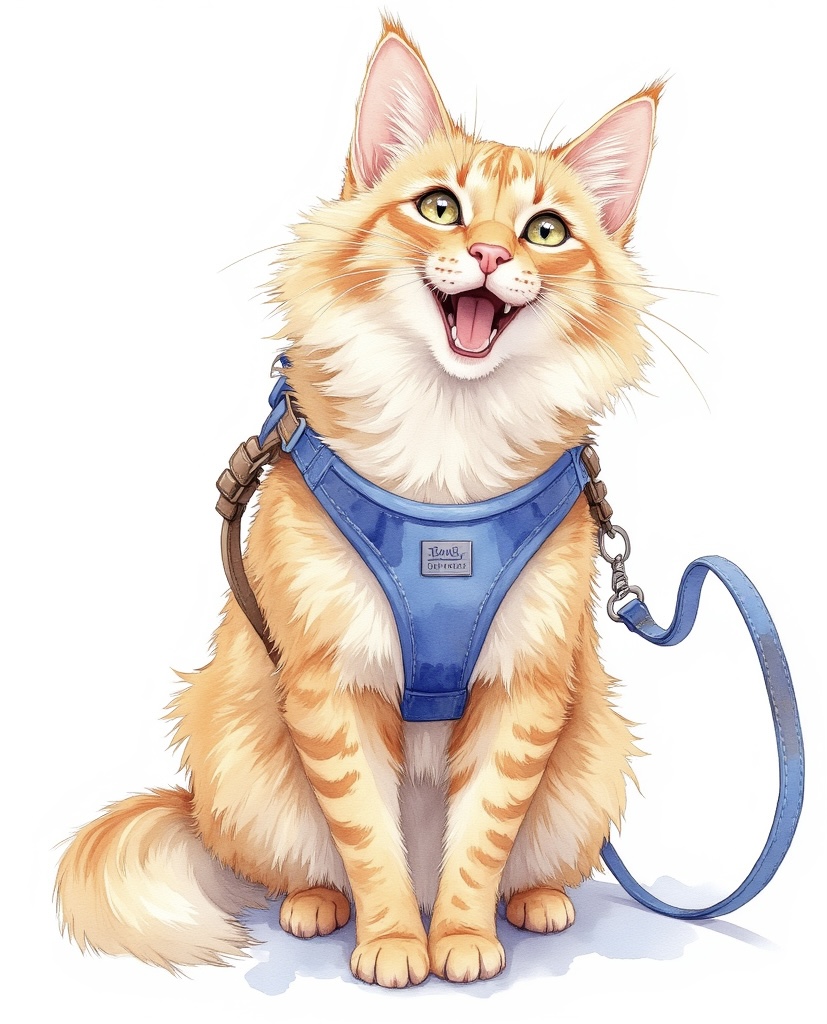
Did you know that some cats are absolutely down for “tiny panther strolls”? Breeds that often take to leash training include Ragdolls, Abyssinians, Bengals, Siamese, Maine Coons, British Shorthairs, Savannahs, Turkish Vans, and Bombays. (Key word: often. Individual personality always wins.)
Why do these breeds often accept leash training?
These breeds tend to share a few “adventure-cat” traits:
- People-forward confidence: Many are more social and comfortable being handled, which makes harness time less dramatic.
- Curiosity + boldness: They’re more likely to explore instead of freeze at a leaf that moved “wrong.”
- Higher energy + enrichment needs: Walking becomes a job for their brain, not just their legs. Leash time can be great enrichment when introduced patiently.
Bottom line: Cats who are curious, confident, and treat-motivated are usually the easiest to train, regardless of breed.
How do you leash-train a cat?
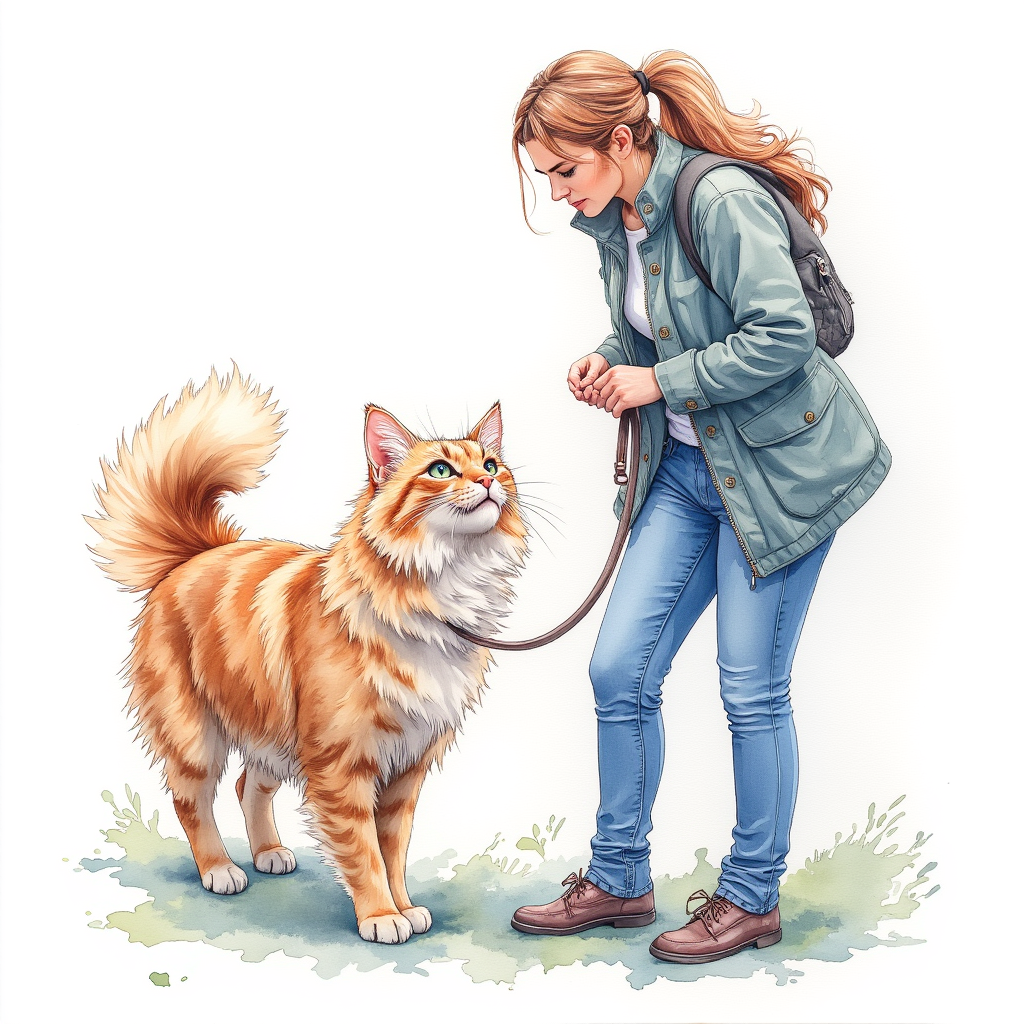
Step 1: Start with the right gear. Use a cat-specific harness (not a collar), fitted snugly enough that they can’t wriggle out.
Step 2: Make the harness mean “good things.”
Put it on for short indoor sessions, then immediately pair with treats, play, or meals. Slowly increase time only if your cat stays relaxed.
Step 3: Add the leash indoors.
Clip it on and let your cat drag it briefly while you distract with treats/toys (in a snag-free room). Then progress to gently holding it.
Step 4: First outdoor “walk” = tiny and quiet.
Choose a calm area, keep it short, and let your cat lead the exploration. Many cats don’t “heel”… they investigate.
Cat leash-walking dos and don’ts
✅ DO
- Do use a well-fitting harness designed for cats.
- Do go slow and keep sessions short and positive.
- Do start indoors until your cat is fully comfortable before stepping outside.
- Do use a lightweight 5–6 ft leash and bring treats.
❌ DON’T

- Don’t use a collar for walking (too easy to slip, risk of injury).
- Don’t use retractable/flexi leashes (harder to control, more risk of tangles/panic escapes).
- Don’t rush or “push through” fear. If your cat flops, freezes, or stress-signals, back up a step.
- Don’t take a nervous cat into busy areas right away (dogs, traffic, crowds = too much too soon).